

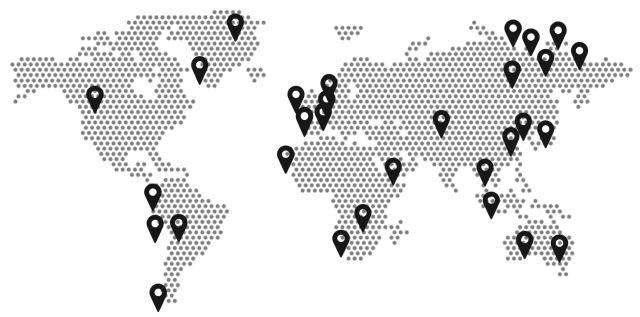
R3, the creator of Corda blockchain has launched a public Corda Network Foundation that will oversee a public network of blockchain nodes running on the network, Corda Network, announced via a press release.
Currently governed by R3, the Corda Network is an independent, not-for-profit foundation will oversee the foundation. The foundation members will be elected later this year.
From the announcement:
Corda Network provides a common layer of identity and consensus for participants on Corda and Corda Enterprise. It is an open shared infrastructure, which enables compatibility between participants on the network.
Corda Network allows for the transfer of data and digital assets between communities of nodes (business networks) and different CorDapps. Participants can therefore create private ecosystems within their organisation, or with trusted commercial partners, while remaining interoperable with the wider Corda community where appropriate. Relevant information can be shared between applications and organisations, creating efficiencies and avoiding duplication. Corda Network also includes identity verification and privacy services to ensure that participants can operate on the network safely.
It provides a global and openly governed network enabling low-friction onboarding of participants to Corda as well as helping developers quickly, securely, and economically develop new applications for Corda and Corda Enterprise.
Governance and the work encouraging adoption of Corda Network will be transitioned over to the new Corda Network Foundation. The Foundation’s board will be comprised of directors drawn from participants on the Network and elected by members of Corda Network. It will operate independently of R3 and its decision making will be transparent and available to all network members.
Key services of Corda Network
Identity Service
The Identity Service controls admissions of participants into Corda Network. The service receives certificate signing requests (CSRs) from prospective network participants (sometimes via a business network operator) and reviews the information submitted. A digitally signed participation certificate is returned if:
The participant meets the requirements specified in the bylaws and policies of the foundation (broadly speaking, limited to sanction screening only);
The participant agrees to Corda Network participant terms of use.
The Corda Network node can then use the participation certificate to register itself with the Network Map Service.
Network Map Service
The Network Map Service accepts digitally signed documents describing network routing and identifying information from nodes, based on the participation certificates signed by the Identity Service, and makes this information available to all Corda Network nodes.
Notary Service
Corda design separates correctness consensus from uniqueness consensus, and the latter is provided by one or more Notary Services. The Notary will digitally sign a transaction presented to it, provided no transaction referring to any of the same inputs has been previously signed by the Notary, and the transaction timestamp is within bounds.
Business network operators and network participants may choose to enter into legal agreements which rely on the presence of such digital signatures when determining whether a transaction to which they are party, or upon the details of which they otherwise rely, is to be treated as ‘confirmed’ in accordance with the terms of the underlying agreement.
Support Service
The Support Service is provided to participants and business network operators to manage and resolve inquiries and incidents relating to the Identity Service, Network Map Service and Notary Services.
Get the weekly commit
New blockchain deep dives every week.
